nikiCardosoZaupa
learning journal 2024/25
as of now i’m focusing on 2 different organic “materials” to convey the idea of life and death. algae and mould. in my studio project proposal i noted how i would like my work to be a tryptic in order to contextualise how life and death are constituted by an interrelation between each other. i agree that this need to be explored further to justify it’s own being. my points are that the choice of a tryptic comes from religion, where the number 3 is often viewed as a symbol of interrelation between different elements (triple goddess in wicca, holy trinity in christianity, the three pure ones in taoism and many more). i want this work to have symbolic connotations, and i want symbology to be a central part of how this work is perceived. the three parts can be seen as 3 totems, of life, death and cyclicity.
i think it’s needed to say that my dissertation will explore themes of (lack of) structures of support, capitalistic exploitation, environmental crisis. how death and life are perceived from a political point of view, hence the need of the religious connotations, because religion has much influence in how we construct our social systems. i would argue that religion is a form of proto-politics, because it can be theorized that the birth of politics comes along the birth of the cemetery. so in a way i make no real difference between religion and politics, the religious nature of the work is more a way to suggest the primeval essence of religion as a starting point for politics.
i think that eventually the 3 totems should lead one another in harmony, or at least i would like to suggest how each influences the other. i don’t really know yet how i’d do that, but my guess is that computation shall be the maker of this connection. each of the 3 totems will have different materials, different outputs but, because they’re finished objects, they can be quantified in numbers. that’s why computation could come in handy. of course computation will be used in other ways to construct these totems as well, each with it’s own set of rules and systems, but i’m also interested in a computational part that gathers each totem’s output to influence the others.
to get back to the material choice, to the algae and the mould. why is algae the symbol of life? algae is believed to be the oldest complex form of life of the planet Earth. bacteria is known to be the oldest form of life, but i won’t be working with it because it would just be too complicated. algae instead offers some “simplicity” in how it can be handled and experienced. it comes from salty water, which is the culturing media par excellence. at one point in the planet, every life form came to be thanks to this mixture of salts and minerals and chemicals. algae is also the actual major contributor of oxygen alongside dryland’s plants, actually, algae produces up to 80% of the Earth’s oxygen reserves (not all of it leaves the water’s surface, but that’s the gist of it). the particular algae i would work with is a bioluminescent algae, meaning that it can emanate light, and this reinforces the idea of a living organism (again, religion comes up: often life – or life giving deity – is pictured as a form of light). despite me saying that algae are “simple” to work with, they really aren’t all things considered. the water needs to be of a specific Ph, the salinity needs to be at a precise percentage – and it can’t be table salt! a range of salts are present in seawater – the temperature needs to be in a specific range without too much swing, the light conditions need to be optimal, not to mention: growing these organisms required some good deal of housekeeping, otherwise bacteria won’t think twice about simply overtaking and eating them away, so the culture vessel needs to be sterile. in other words, algae, like life, need care. systems of support must be put in place for its maintenance, and balance must be kept under control to allow for flourish.
mould instead is the symbol of death. once the right amounts of proteins and moisture are left to rot, mould develops with ease. every organic thing will eventually mould, because mould is the main actor in place for decomposition, for giving back what was borrowed from the Earth. mould, differently from the algae, does not really need “care”, it instead thrives because of the lack of it, because it will eventually arrive. energy must be spent if one wishes to destroy it – a useless expense, given that it will arrive again soon after. in this way, the mould reminds me of a memento mori, a sign of unstoppable decay. of entropy towards simple form: decomposition leads the organic to become mineral salts, water, sugars and carbon dioxide, so that it can be repurposed to feed another birthing lifeform. mould is also often seen as bio-degradation. some black and brown moulds eat through the wood in our homes, making them weaker. mould doesn’t need care, or balance, it needs acknowledgement. i’ll talk about black mould in social housing in my dissertation to emphasize how a lack of care for life leads to an imbalance, and the growth of the toxic element.
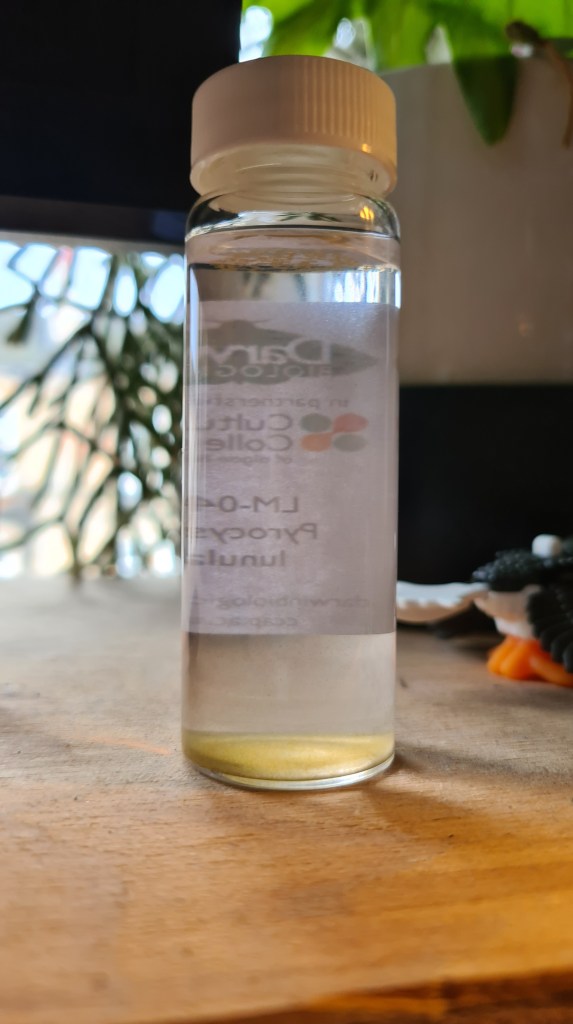
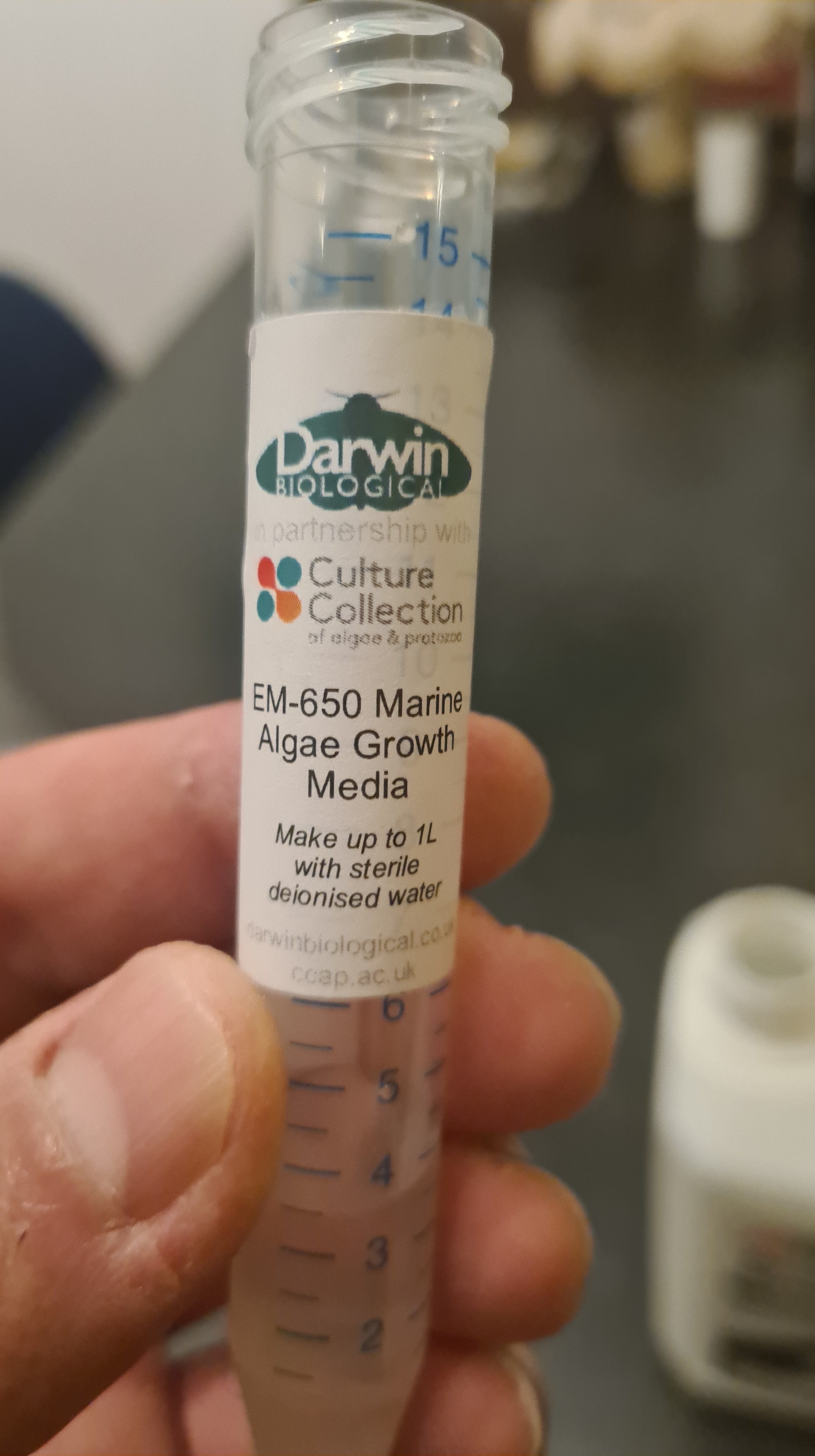


pyrocystis lunula, my algae of choice
last year I tried to grow some lingulodinium polyedra but it didn’t end up well. a bad timing with the delivery and my inexperience led to the death of all my samples. at the time i chose to look into these lifeforms in order to prove a point about the intersections between art and science: i was in touch with a scientist from a lab in Poland (Dr. Maciek Wnuk, head of lab), who gave me some advice as to how to best get my cultures going – unfortunately, his advice came quite late because he was obviously very busy with his own work, so I couldn’t really attempt to grow the l. polyedra in time for the end of last year. it’s also valid pointing out that polyedra is slightly toxic. its yessotoxins accumulate in molluscs which, when digested by humans, can represent an issue because of the high concentrations of it. of course this means that by applying basic hygienic techniques (like using gloves, disinfecting work surfaces, not drinking the water) i could keep myself safe, but i was looking for something even more risk free, because GSA is paranoid and fair enough…
when looking at bioluminescent microalgae i fell down a rabbit-hole of other organisms and bacteria – i settled in not working with bacteria simply because bacteria tends to be more difficult to work with in the long run (petri dishes only), and because some bacteria can easily spread if not handled with the correct lab equipment, which i surely don’t have. most of these organisms are quite harmless to humans, but again i was trying to minimize any single possible risk: volatile stuff, or stuff that emits spores, or stuff that can go through skin was to be avoided. an important algae i was sure i would avoid was the karenia brevis, main responsible for the red tides in the gulf of mexico. harmful algal blooms of karenia brevis can decimate the water’s population in a matter of days, and even create respiratory problems to the people living close to the affected areas. the polyedra is also one of the main actors, but its not as dangerous, and as I’m asthmatic myself, i preferred to keep myself distant from the karenia. eventually, i found a commercial service that ships around these bulbs containing some bioluminescent algae as a educational toy (branding name: pyrodinos). the toy was marketed for kids, so it must’ve been safe to handle. the species of algae used in that toy was pyrocystis lunula, another dinoflagellate (like karenia and the polyedra) which, according to the papers, has no real record of affecting humans. p. lunula is also quite ubiquitous, it can be indeed found in warm waters like the aforementioned gulf of mexico, but even in india, and sometimes it appears in scotland too. these were clues proving that it’s quite a robust organism, able to withstand quite a lot of different ranges, and given that I would have had to start growing it over the winter, it felt like a good candidate.
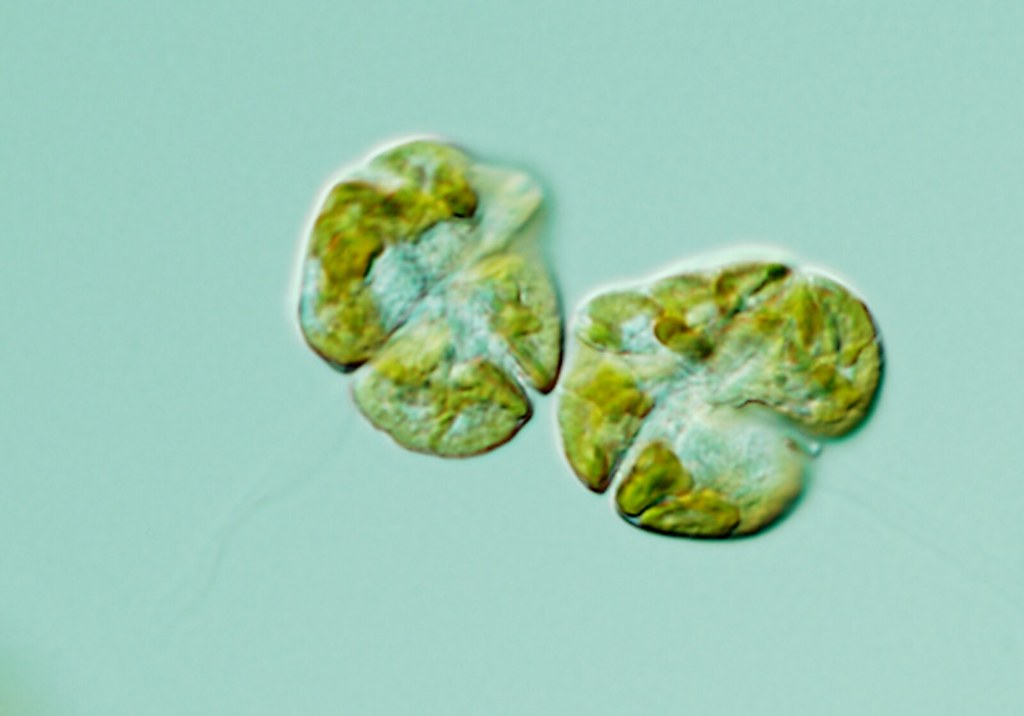
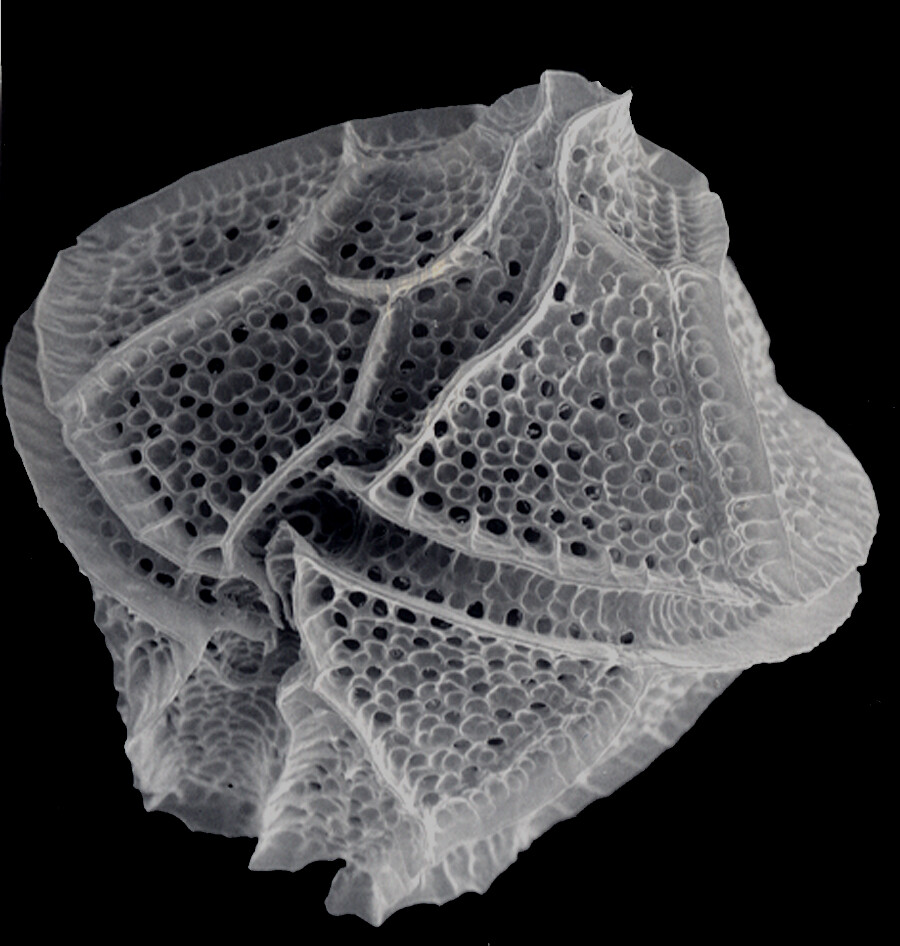

in order of appearance: karenia brevis, lingulodinium polyedra, pyrocystis lunula.
growing the pyrocystis lunula
after getting myself a few jars, some medium and a grow light i started growing the lunula. i bought a sample of it from CCAP (culture collection of algae and protozoa, a UK based lab) for around £20, and i received a 30ml vial quite packed with algae. i started by dividing the algae in 3 jars, 10ml per jar, and added 100ml of saltwater. the directions from DR. Wnuk were to always try to propagate with a 1/10 ratio of culture and new saltwater. the medium i used contains a selection of chemicals and trace minerals to act as a nutrient, and the grow light has to be a full spectrum light. they prefer a temperature between 18 and 25 degrees C, and they should be exposed to light on a stable rhythm of 12 hours light and 12 hours dark.
these algae have a circadian rhythm, they emit their light when it’s night, and emit way less of it when it’s day. i decided to flip their circadian rhythm by providing light overnight: this to make it possible for them to be visible during exhibition hours. they didn’t like the changes in sleep time, so it took them around 2 weeks to get back to a healthy regime under the new circadian rhythm, but eventually it worked quite well!
the algae is propagated every 2 months. normally it would take them 1 month, but scotland is quite cold, so they probably weren’t under a stable and warm enough temperature to reproduce themselves fast enough – I’m hoping that the spring time will bring in some more warmth.
I would like to review the previous concept I was thinking about. although a 3-parted work would work well with the symbolistic concepts I was exploring, I feel like I was getting too focused on the finished piece rather than the process of building the piece itself. my mistake lies probably in a few reasons: the main one I believe being the nature of working with live organisms – I am extremely anxious about it, they require their own timing, their own biome, their own attention, so I thought that maybe having a framework to work towards would help me regulate all these variables. in a way I had already a work built in my head, the organisms were just something to be inserted into this pre-fabricated space. It was a mistake for 2 reasons: 1) the work should be built around these organisms, shaping itself as I slowly understand them, and 2) because the work was planned before understanding the organisms, it simply won’t function as I would like it to.
I tried to expose the p. lunula to vibrations, but it didn’t work. my setup was fairly simple, a aluminum dish sitting on top of a subwoofer: the algae wasn’t responding in a way that felt effective. yes I would see some random bursts of light, but the vibrations seemed to offer something still too weak and controlled. what i found – and maybe this is because my samples were still fairly young when i tried – is that the p. lunula needs a *strong* amount of friction in order to activate continuously. cymatic patterns do exercise a moderate amount of motion in the water AS THEY FORM, but once formed they tend to reach a point of stability, hence not stimulating the algae anymore.
overall, this realization was quite sad. using chladni patterns would have been elegant.,
i experimented with other stimulation methods: shaking the jar, for example, leads to impressive results, but it tends to exhaust the algae pretty quickly – i believe it’s because the reaction needs a few chemicals to interact with one another, and while a vigorous shake does allow that, it also displaces them, making it so that subsequent stimulations are weaker.
I also experimented using citric acid. using a dropper I’d hit the algae-water surface periodically. the effect is indeed impressive, because it makes me think of some kind of magic rain. the algae definitely doesn’t like citric acid. it’s because the acid weakens the single cells’ barriers (think of it as corrosion), so in a way we’re forcing the luciferin to come into contact with the oxygen by opening it’s gate. this solution sure can look interesting (because you can see the droplets hitting the algae very clearly), but it would be a temporary solution, as eventually the algae will die quickly due to the water’s PH change. I wouldn’t opt for this because it would completely deplete my algae reserve. maybe a video could be done.
an option i used in my WIP show would be to simply use a stirrer. i attached a stirrer in a DC motor and connected it to a button. despite a communication problem meaning that I couldn’t place a grow light besides my WIP work, the stirrer manages to activate a *very* faint blue glow. it works, but it’s very mono-dimensional, and because of this I’m even wondering if user interaction should be considered at all.
the option that fascinates me the most now has something to do with all of the previous methods. I was looking into some options to oxygenate the water more. this would help once my batches grow in size because eventually 1) the algal presence will obscure the light coming into the jars, keeping things in motion would expand the total surface area exposed to light simply by mixing the cells around 2) the algae tend to attach to the container they’re in, again some motion would prevent that. 3) bigger batches of algae means a lot more water. the more water is added in a container, the less total oxygen in the water can circulate. it’s common aquarium knowledge that a aquarium pump serves a few purposes: oxygenating the water and keeping the debris from attaching to the aquarium surface.
experimenting with a aquarium pump showed me that there are a few benefits in regards to my work: oxygenation, first of all, will aid the growth and overall health of the algae. the bubbles also exercise ENOUGH abrupt motion to stimulate them briefly. the nature of the bubbles also makes them disperse semi-randomly, which is very appreciated by both me and the p. lunula. ALSO, something worth noting is that the bubbles still do create a specific sound: the container they’re in vibrates very slightly, and these vibrations should be used.
Using the bubbles is what I mean by developing around the organisms, rather than inserting them somewhere. it was a solution I would have had to deal with anyways because at my next propagation I’ll have to use very big jars, and i’m excited to see that a “maintenance” solution also can become a “stimulation” solution.
in the 2024 I had the luck of helping out and attending the Venice Biennale (I was a projector technician there). one of the works that surprised me the most was the work in the italian pavillion (extremely rare circumstance!) by Caterina Barbieri, in collaboration with a few organ-building institutions. the work was all about the organs and the ability of air to transport information through vibration. a ‘main’ organ pipe was placed in a room. speakers located at the corners of the room would emit a certain low frequency that would allow the organ pipe to successively vibrate. in another room, other organ pipes (their size was a fraction of the main pipe) would respond to these main vibrations, hence emitting their own frequency too.
a few things worth noting about Barbieri’s piece: there’s a mathematical equation that determines the relationship in size between the main pipe, the smaller pipes, and the “main frequency”. the sound is transmitted through air, so long as the equation is respected, but the differing dimensions of the pipes allow for harmonics of the “main frequency”. the piece itself is all about frequency and intercommunication, and it inspired me largely.
I’d like to explore the concept of air and frequency and intercommunication. i find that air is a nice element to couple with water due to both being a fluid, and most times behaving similarly. i believe that the specific frequency emitted by the bubbles in a not-full container can be harnessed, IF it has a relation with a container that completely encapsulates both the container with the algae and the bubbles themselves.
to put it in practical terms, I’d like to have a “algae container” consisting of a cylinder. another, larger and empty cylinder would contain the algae container. a aquarium pump would then be inserted in the algae container. the expected outcome would be that, so long as the algae container and the external container (which we call pipe, for ease) have a relation in terms of dimensions, volume and border thickness, a specific sound will be transported and emitted by the pipe. another evolution where this could be taken would involve a system that lowers or rises the algae container vertically, modulating the pitch.
pipe organ idea?
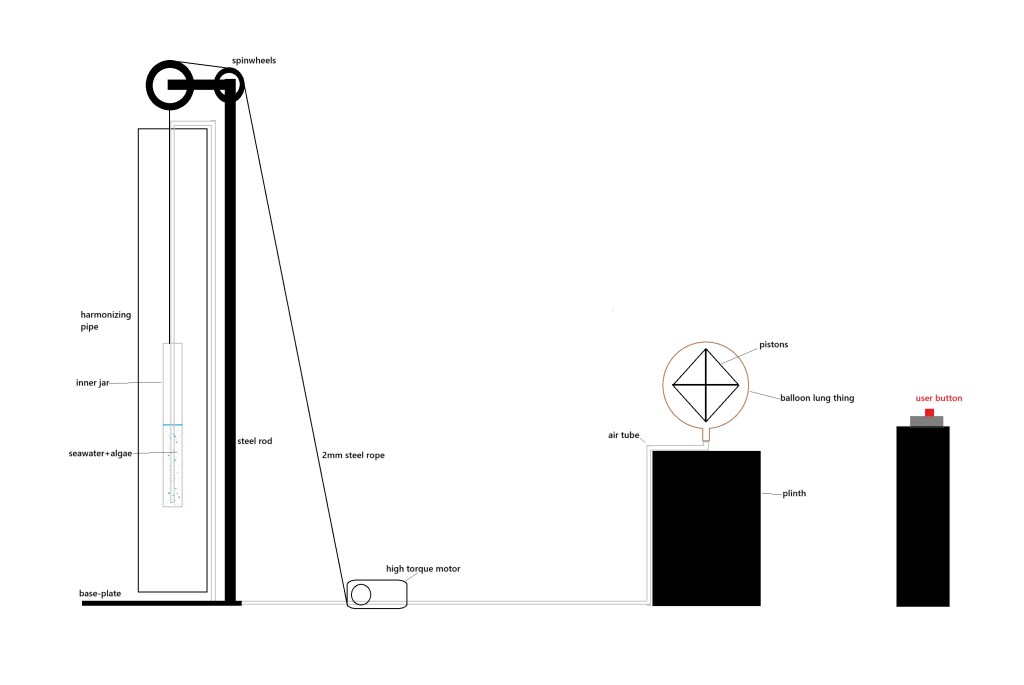


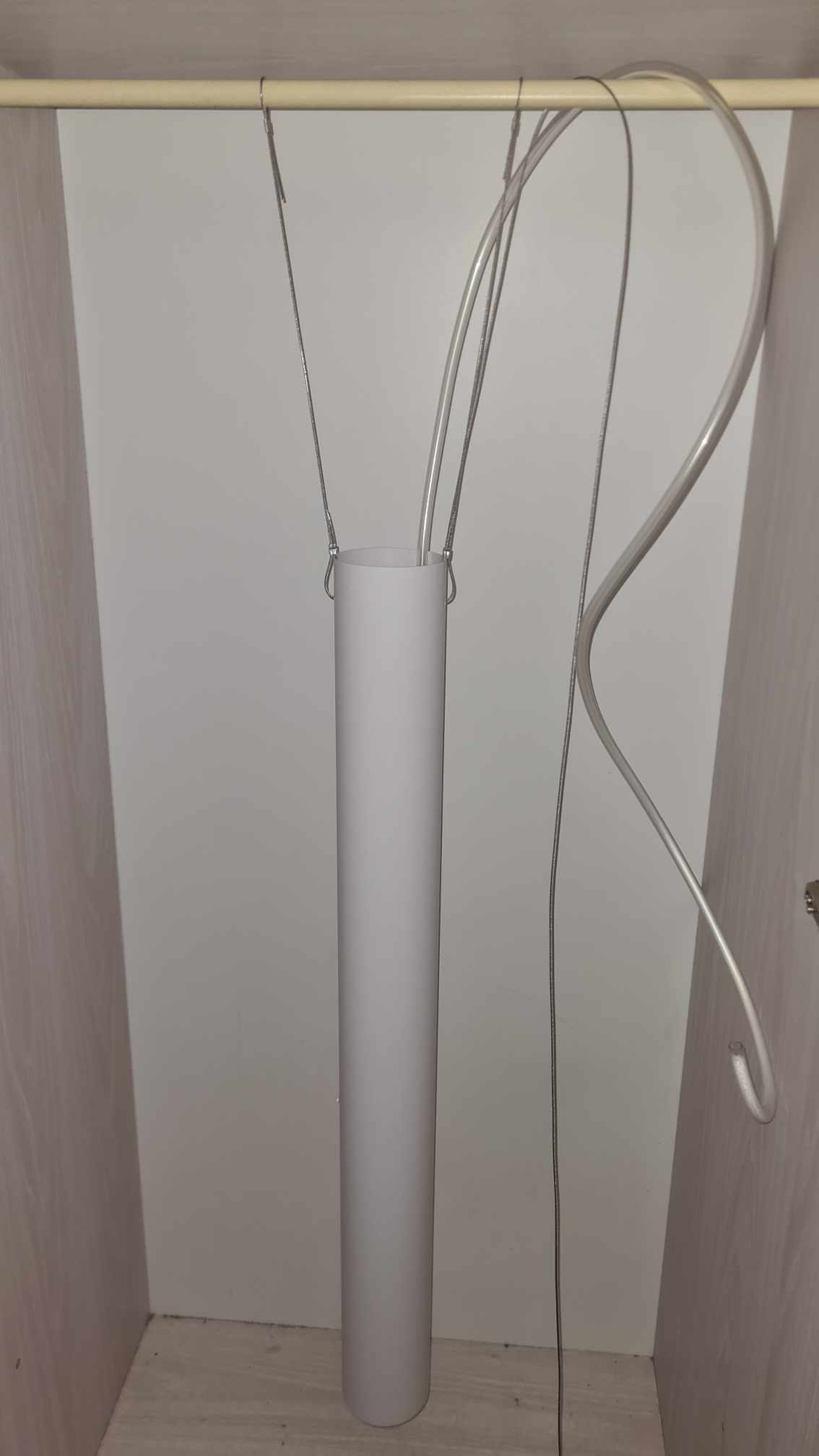
the idea illustrated above (which, because of logistical and conceptual realizations is subject to change) depicts a schematic of what I’d like to achieve ultimately. the piece can be described by 2 smaller processes, the process that gives air (which we can call ‘lung’) and the process that receives the air (the ‘organ pipe’ inspired body).
I’ll go ahead and describe each part now:
notes: the picture shows a user button, probably that won’t be there because I’m reconsidering the option of adding user interaction.
– the lung: initially the idea was to create a sort of “muscle” that would be able to store and release energy (air). my idea initially revolved around using a system of pistons that would dilate and compress a balloon. the lung would also consist of 2 layers, the ‘balloon’ layer, which maintains stability and doesn’t break, and a second layer made by a molded silicone mat that would work as a second skin to the balloon. the idea initially was to inoculate the second skin with nutrients and some mould, and eventually the mould would break down the second skin, showing a sort of ‘dying lung’. I won’t explain the piston system because it would have been too difficult to realise, but a drawing above shows a different method for it: inspired by how pipe organs are made – a large sac of air (called bellows) used to be controlled by a specific person that would push the air into the instrument, while a musician would push the needed notes on the keyboard – i want to make my own bellows mechanism, which seems to be simple enough. It would consist of a high-torque motor (20-50kg) with a 5cm gear linking to a 10cm gear. a sliding pin would be attached to the second, larger gear to transform the rotational motion of the gear into a linear motion. 2 valves would be used to control the air’s direction. I’m also ditching the double balloon idea, I’ll instead use a single sac and use its motion and some projection mapping to synthesize the idea of a dying lung. although working with mould was very interesting, i think it needs too much attention, and in general, it’s way too unpredictable.
– the pipe organ: a flexible tube will direct the lung’s air towards the pipe. the tube would end up inside a smaller jar containing the algae. this smaller jar will be suspended into a transparent PVC tube called harmonizing tube. air would blow into the smaller jar, stressing the algae and creating bubbles. the motion of the bubbles would create a resonance with the harmonizing pipe. a few changes have happened since i’ve finished that schematic shown above: the harmonizing pipe would be suspended too, and I’m considering ditching the idea of raising or lowering the smaller jar. I was hoping that by raising and lowering I could influence the pitch of the harmonics, but the difference is not very noticeable – it would go from a specific tone to pink noise, basically… maybe more experimentation should be done by modulating the openings of the harmonizing pipe IE was thinking about glass bottles, and how clean the tone is when some air is blown at the right angle through the opening. glass bottles usually have a narrower neck, so there’s the possibility that it’s that bottleneck (no pun intended) that allows for more complex harmonics??? anyways, a webcam would be pointed at the jar containing the algae. reading the colour values given off by the stimulated culture can be used to influence the lung, creating a interdependence between the lung and the organ.
– basically we can see the lung as a representation of effort and decay (or decay during effort). the lung will literally breathe because of the cyclical motion of the gears, providing air to the algae in a sort of self-sacrificing act: as i mentioned above, oxygenating the water can be beneficial to some microalgae, the lung is in fact “helping” the gift of life, the primeval broth represented by the algae, and the algae, in turn, respond, glowing and emitting sound: light and sound are primordial forms of communication. amoebas utilise light and chemical processes in relation to UV light to guide themselves towards nutrition. scientific studies show that the part of our brain responsible for ‘musicality’ forged way before the part responsible of language (actually, the language part is a derivative of that previous musical part). i know i sound like one of those evolutionarists, but i believe that transmission of information is the only real proof of an existing life: it’s the blood flowing through the veins, the motor neurons reaching muscular tissue, the cyclical nature of duplicating and dying cells. exchange and flow of information is the symbol of life itself. SO the lung is responsible for nurturing such life, and as the life “shows” itself it will influence the motion of the lung: too much light, and the mold growing on the lung will increase, too little and the lung will accelerate its breathing. this influence wants to represent the price for life, and how such beauty comes at a cost: resources, energy, effort.
example showing how I’d like the later mentioned lung to function. made in fusion 360.
visualising mould
as mentioned above, I won’t be working with real mould because it would be too risky and unpredictable. i opted for visualising mould as a 2d generative image. I’m looking into voronoi patterns, and how they are often used in simulation to represent mould or fungal propagation. this week i’m very ill because of a flu so i’ll take the opportunity to recreate a voronoi based video that shows some mould growth. voronoi patterns are used in a range of different applications, from science to engineering, to also linguistics. often they are represented as a diagram where the main parameters are the distance between the seeds and where and how many cells are touching. these tesselations consist of a seed, a single point of origin, and a cell, which encapsulates the seed. normally some parameters would be used to dictate the dimensions of the cells, and the disposition of the seeds would eventually lead the cells to touch, thus forming these patterns. if we are seeing the seeds as mould inoculations in a petri dish, the cells would be the consequent mould growth around the seeds: this is the main reason why i’m looking into voronoi patterns.
my version of the voronoi/mould growth is shown below:
of course this is not a simulation, just an arrangement of specific textures, displacement and some normal mapping in a feedback loop. i also noticed that it’s not really exactly voronoi patterns, but ironically that ends up looking more realistic and mould-like. the current TD network can represent a localised growth, but 1) the input is a full-screen array of randomly coloured pixels – meaning that the input is non-specific as of now, and the weight of each seed is equal and random at the same time and 2) the system reaches stability too quickly. perhaps the displacement map is too high, or it could be something to do with the levels. it needs further work. I would like the visualisation to have a relation with both the input (where are the glowing algae localised, and how bright are they?) and the motion of the lung itself (breathe in breathe out, grow fast, grow slow, or even reverse growth.
algae glow in relation to mould growth
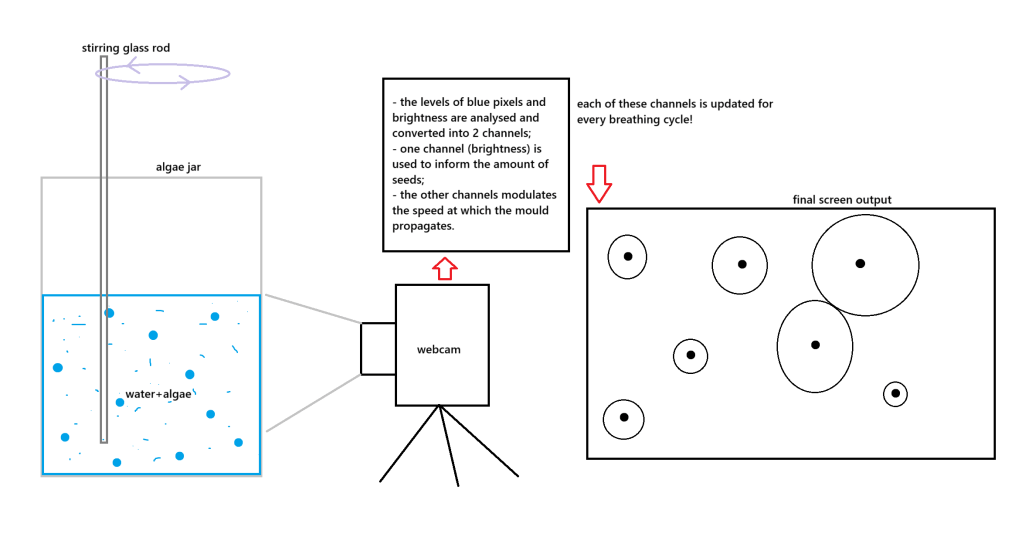
I’m preparing the next experiment that would decide how I’d use the algae’s glow to influence the mould growth. the webcam part is relatively easy: when placed in a fully dark space, the webcam will capture continuously the state of the algae. when stimulated the algae will produce the blue glow, and the webcam will analyse that colour, alongside the amount of brightness generated (respectively colour and brightness values). I’ve already worked with systems like this one and I’m confident that it will be easy. tomorrow I’ll try to experiment with something like this:
 Site Title